
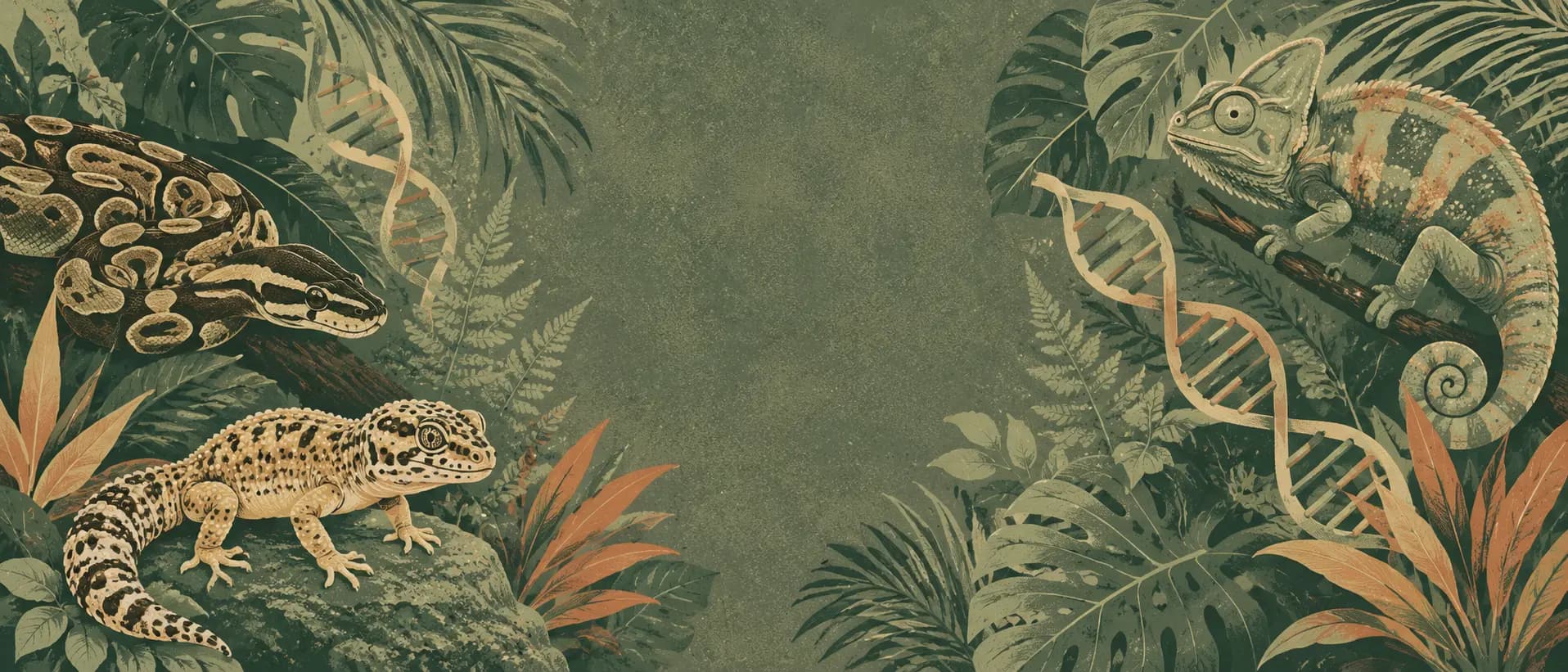
Explore Reptile Genetics:
from DNA to Discovery
Our library is just beginning to hatch!Dive into the fascinating genetics behind the colors and patterns that make every reptile species unique.
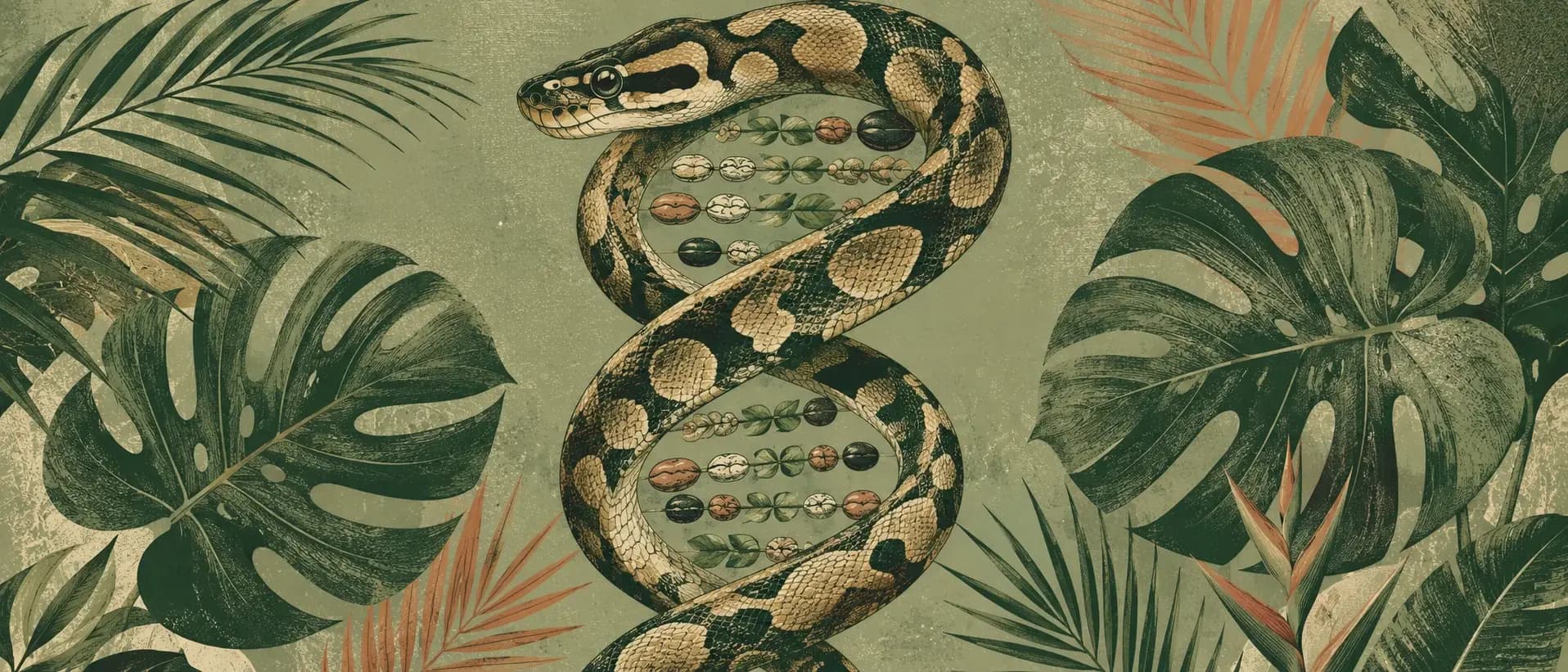
Understand the Science Behind the Scales
Life on Earth is built on a shared biological language. Whether in a tortoise, a gecko, a fish, or even a plant, each organism carries instructions inside its cells written in DNA. This molecule, deoxyribonucleic acid, is composed of four chemical bases arranged in long strands that coil into a structure known as the double helix. Together, they form the biological blueprint that shapes how an animal develops, functions, and responds to its environment.
Shared Ancestry
Although species appear dramatically different, much of their genetic structure is surprisingly similar. All vertebrates, including mammals, birds, and reptiles, evolved from a common ancestor and retain many of the same genes responsible for essential life processes. Humans share roughly 90 percent of their DNA with domestic cats and nearly 99 percent with chimpanzees. These shared patterns reflect deep evolutionary connections and help explain why certain biological mechanisms recur across very different species.
Reptile Genetics
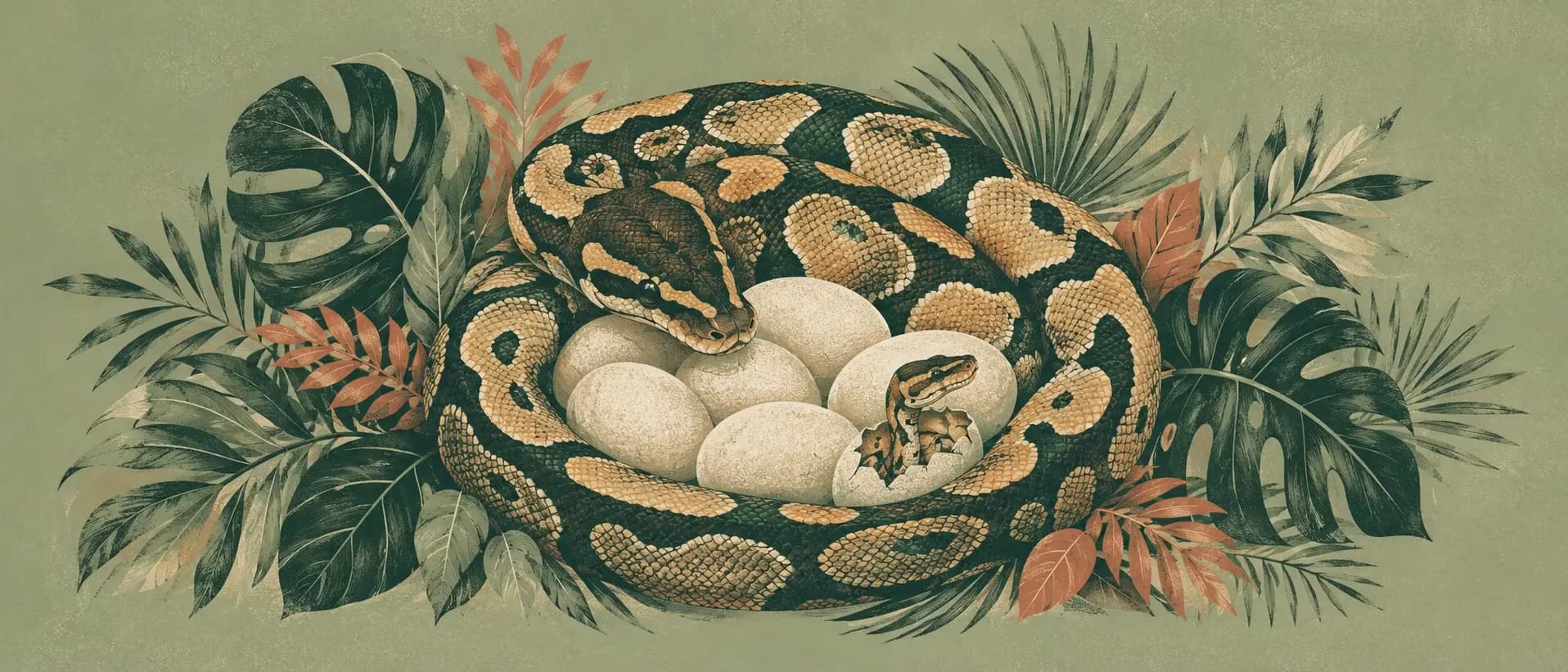
Reptiles offer a particularly fascinating perspective on genetics. Their lineages extend back more than three hundred million years, giving them some of the deepest evolutionary histories in the animal kingdom. Reptiles exhibit biological characteristics that differ markedly from mammals, such as temperature-dependent sex determination in many species, specialised pigment cells responsible for vivid coloration, and a wide diversity of body plans shaped by ancient evolutionary pressures. Studying reptile genetics reveals far more than their origins; it helps explain how animals develop, behave, and respond to their surroundings today, linking modern husbandry to biology shaped deep in the past.
Genomic Insight
As genome sequencing has become faster and more accessible, the resolution at which biology can be studied has increased dramatically. In reptiles, this has made it possible to describe genetic mechanisms that were previously inferred only through observation, including how immune systems function, how coloration develops, and why certain traits appear, persist, or remain hidden across generations. Genomic insight allows long-standing observations to be understood in clearer biological terms.
Practical Value for Keepers & Breeders
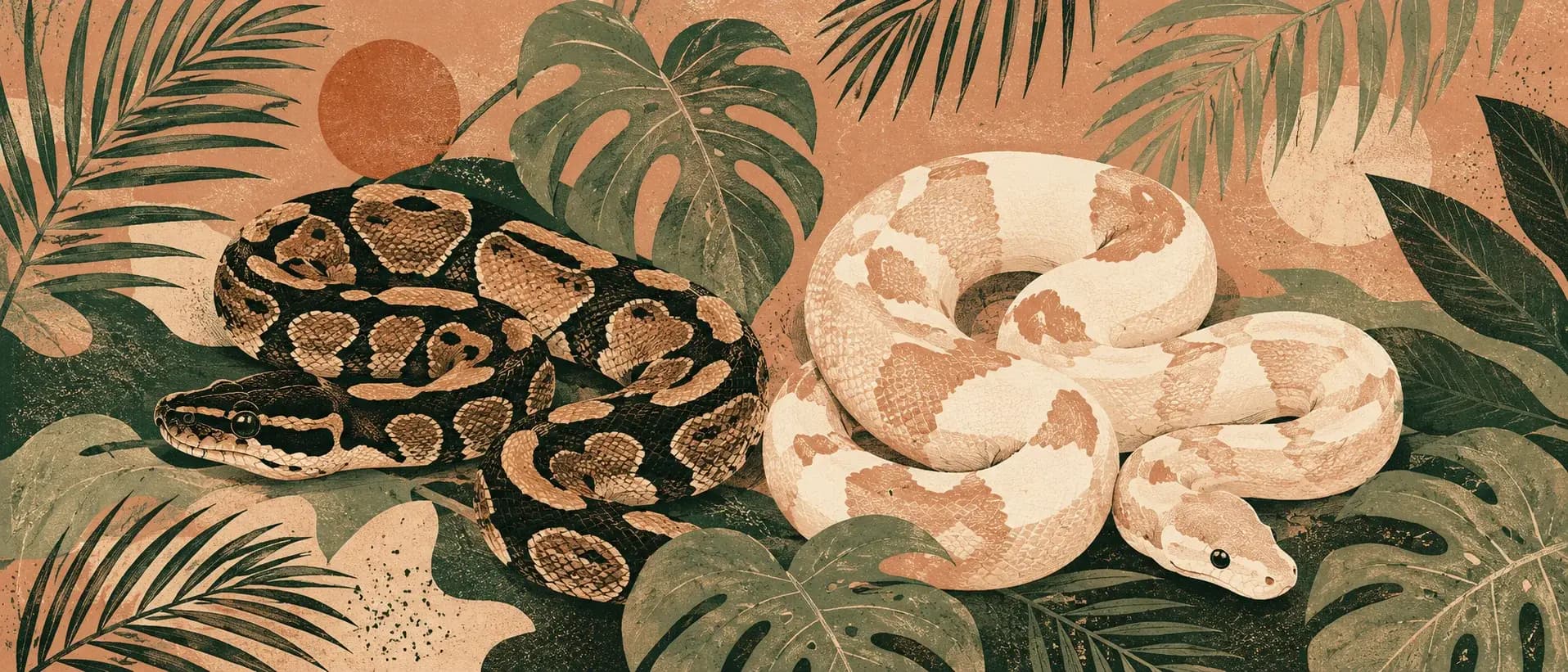
For keepers and breeders, genetics provides clarity where observation alone may fall short. Sex-linked markers reveal the sex of species that show little or no external difference between males and females. Traits often follow predictable inheritance patterns, and hidden mutations can influence the appearance of future generations. Taken together, genetic information allows biological characteristics to be documented with clarity and consistency, forming a reliable reference that can be preserved, revisited, and placed alongside breeding histories and health records over time.

Have a passion you want to document, or a topic you’re dying to learn about?
Whether you’re sharing what you know or asking what you want to learn more of, let’s grow this hub together.